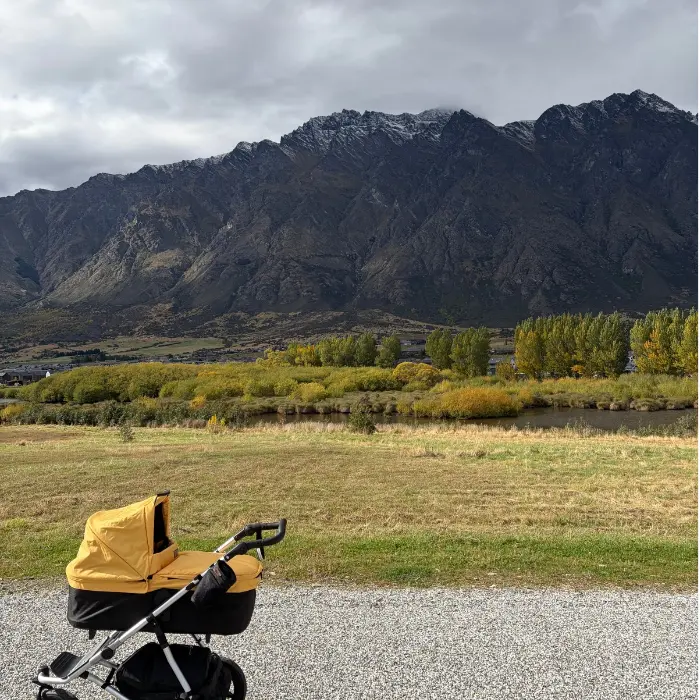
After months of waiting for your little one to arrive, you might be excited to finally get out and about and test out your new Mountain Buggy! But while those first walks with your baby can be special, it's important to give your body time to rest and recover, too.
Walking can be a lovely way to gently reintroduce movement after birth, get some fresh air and spend time outdoors with your baby. But when it comes to postpartum recovery, more isn't always better, and there’s no rush.
A gentle guide to walking after birth
Here’s a general guide to help you gradually build up your walking time over the first six weeks:
- Weeks 0–1: Prioritise rest and recovery. Keep movement gentle and limited to what you need to do around the house.
- Weeks 1–2: If you feel ready, try short walks of around 5 minutes.
- Weeks 2–3: Gradually build towards 10–15 minute walks.
- Weeks 3–4: Aim for around 15–20 minutes of walking per day, if comfortable.
- Weeks 5–6: You may be ready to build towards 30 minutes of walking per day.
Remember, this is a guide, not a deadline. Some women may feel comfortable doing a little more, while others may find these durations too much. Meet yourself where you're at, and don't feel pressured to progress just because a certain number of weeks has passed.
Signs you might be doing too much
When returning to walking after birth, pay attention to how your body feels both during your walk and in the hours afterwards. If you notice any of the following, it may be a sign to slow down, shorten your walks or take some extra time to rest:
- Increased bleeding: Your vaginal bleeding becomes heavier or changes to a brighter red after activity.
- Pelvic heaviness or pressure: A feeling of dragging, heaviness or bulging in your vagina or pelvic area.
- Pain or discomfort: Increased pain around your perineum, pelvic area, abdomen or caesarean incision.
- Leaking urine: New or increased bladder leakage during or after walking.
- Increased fatigue: Feeling unusually exhausted during your walk or needing significantly more recovery time afterwards.
- Symptoms that linger: Feeling more sore, heavy or uncomfortable later that day or the following morning.
If you notice these symptoms, reduce your walking duration and give yourself more time to recover before building back up. If symptoms persist, recur or concern you, check in with your midwife or pelvic health physiotherapist.
Important: Don't push through significant pain, heavy bleeding, chest pain, shortness of breath, or one-sided calf pain or swelling. Seek urgent medical assessment for these symptoms, and call emergency services for severe or sudden symptoms.
Your recovery is unique
How and when you return to walking will depend on a number of factors, including whether you had a vaginal birth or caesarean section, how your birth went, and whether you're managing any birth-related injuries or complications.
If you're unsure where to start, speak with your midwife or a pelvic health physiotherapist for individualised guidance.
The goal isn't to get back to where you were as quickly as possible. It's to give your body the time and support it needs to recover, one small step at a time. 🤍
Abbey is a Personal Trainer and Perinatal Exercise Specialist at Thrive With Abbey, based in Queenstown, New Zealand. She helps women build strength and confidence throughout pregnancy, postpartum and beyond.